
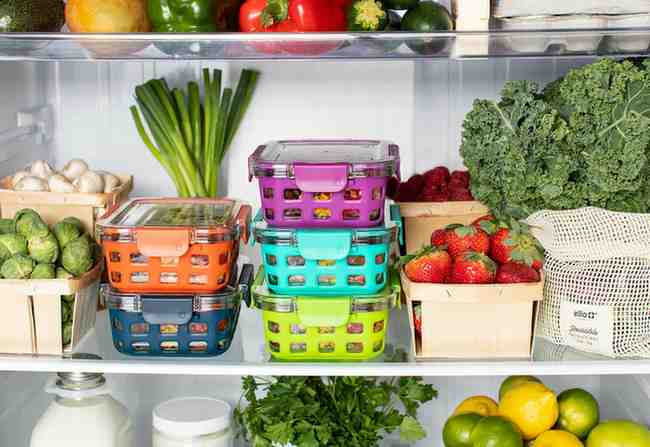
Food Storage and Preservation
- 👉 Raw food items should be appropriately stored for future use.
Ways to store Food safely.
Grains and pulses.
- 👉 Store in clean and airtight containers six inches above the floor and 6 inches away from the walls.
Spices and spice products
- 👉 Store in clean, leveled airtight jars.
- 👉 Always store in a dry place.
Vegetables
- 👉 Fresh vegetables should be sorted, cleaned, and stored in net-holed bags, containers, or bamboo baskets.
- 👉 Wash and dry beans, etc., and Store in airtight bags in the refrigerator.
- 👉 Wash carrots, radishes, beets, roots, tomatoes, eggplants, pumpkins, etc., and dry them in a perforated bag and store them in the refrigerator.
Fruits❤️❤️
- 👉 Mangoes, jackfruits, guavas, papayas, olives, pineapples, grapefruits, apples, pears, and oranges can be stored in a dry place.
- 👉 It is better not to store ripe bananas and jackfruits in the refrigerator.
- 👉 Perishable fruits can be stored in the refrigerator for a short time.
Milk and dairy products
- 👉 Liquid Milk can be stored in the refrigerator for one to five days.
- 👉 Butter, cream, yogurt, sweets, and cheese should be stored in the refrigerator.
Oil
- 👉 Store in a cool, shaded place and in a jar with an airtight lid.
- 👉 Keep away from stoves or sunlight.
Tinned and bottled foods.
- 👉 Store canned Food in a cool, dry, dimly lit place away from sunlight.
- 👉 Bottled Food can be stored in the refrigerator if there are any instructions on the label.
- 👉 It is better not to keep canned or bottled Food in the refrigerator or deep freeze.
Fish, meat, eggs
- 👉 Eggs should be washed, dried, and stored in a separate tray in the refrigerator.
- 👉 Raw meat and chicken that can be used within a day should be packed in airtight food-grade plastic bags and stored in the refrigerator at 1.5 °C.
- 👉 If it is necessary to store for a more extended period, it should be packed in airtight food-grade plastic bags and stored in the refrigerator at -18 0 C.
- 👉 Raw and cooked Fish and meat should be wrapped in an airtight, food-grade plastic and stored separately.
Storage containers
- 👉 Before storing Food, the container should be cleaned with detergent or soap and washed thoroughly in safe water and dried.
- 👉 Cracked or broken containers without a lid should not be used to store Food.
- 👉 Can be washed with hot, safe water.
Wrapped foods
- 👉 Bread can be stored in a clean, dry place and at normal temperature for one or two days.
- 👉 If the weather is humid, it is better to keep Bread in an airtight container in the refrigerator.
- 👉 Store biscuits, ready-to-eat foods, packaged pasta, etc., in a cool and dry place.
For food storage.
- 👉 The food storage place should be clean and well-ventilated.
- 👉 Food should be kept in a dry place away from humid places.
- 👉 Fruits and vegetables should be washed and air-dried before storage.
- 👉 Avoid storing Food in non-food-grade plastic containers.
- 👉 Fish, meat, and vegetables should be kept in separate bags while shopping. All types of raw Fish and meat should be cooked quickly or, if necessary, stored in individual bags and kept in the Freezer and refrigerator.
- 👉 To prevent unwanted mixtures, non-food materials such as cleaning materials, washing powder, detergents, etc. must be kept away from Food.
Rules for using a refrigerator
- 👉The refrigerator should be away from any source of heat and have good ventilation.
- 👉 It should be placed in a place.
- 👉 The door of the refrigerator should not be kept open for a long time.
- 👉 The same type of Food should be stored together.
- 👉 To prevent contamination, cooked Food should be kept on top in the refrigerator, and raw Food should be kept on the bottom.
- 👉 Milk and dairy products should not be kept under raw Food and under odorous Food.
- 👉 Foods that will be stored for a long time should be refrigerated.
- 👉 The refrigerator and the Food in the fridge should always be covered so that their quality is not lost.
- 👉 Raw Fish and meat should be stored in airtight food-grade plastic bags to avoid contamination.
- 👉 Cooked meat should be kept tightly closed in food-grade containers while storing.
- 👉 Hot Food should not be kept in the refrigerator to cool quickly.
- 👉 Food should be taken out of the refrigerator or Freezer first, following the FIFO rule, first in, first out.
- 👉 Excess Food in the refrigerator cannot be kept together at once.
How to keep your refrigerator or Freezer clean
- 👉 The refrigerator or Freezer should be cleaned every two weeks.
- 👉 Make sure that no unwanted liquid leaks from the refrigerator or Freezer.
- 👉 Cleaning and disinfecting the inside of the refrigerator or Freezer
Disinfectants can be used. - 👉 Regularly ensure that the regulator in the refrigerator or Freezer is working.
Interior of the refrigerator
- 👉 Freezer deep.
- 👉 Cold shelves on top.
- 👉 Less cold on the bottom.
- 👉 Refrigerator door.
- 👉 No cold in the middle.
Food preparation and Cooking
👉 Food should be cooked in such a way that the nutritional value and health benefits of the Food are maintained. It is essential to ensure that Food is not contaminated. We can learn how to provide this from the following dos and don’ts table.
Before cooking
Dos and don’ts while cleaning Food.
- 👉 Food should always be appropriately stored in the cabinet in a clean part of the kitchen.
- 👉 Raw Fish, meat, and vegetables should be washed with safe running water.
- 👉 Raw Fish, meat, and vegetables should be kept separate, and spoiled parts should be removed from fruits and vegetables.
- 👉 Raw fruits and vegetables should be washed, cleaned, and dried before storing in the refrigerator.
- 👉 If the shell is dirty, it should be washed because germs can enter the body from dirty shells.
- 👉 Dirty eggs should be washed thoroughly and kept dry.
- 👉 After processing raw Fish and meat, hands should be washed with soap and water.
Dos and Don’ts While Cutting and Washing Food.
- 👉 Food grains should not be washed repeatedly before cooking.
- 👉 To maintain nutritional value, fruits and vegetables should be washed before cutting or peeling.
- 👉 Cut vegetables should not be soaked in water for a long time. This leaches out vitamins and minerals.
- 👉 Raw Fish or meat should not be kept on a plate or home-cooked Food.
Important to know
- 👉 Rice should be washed in moderate water. Repeated washing causes the minerals, vitamins, and other nutrients in Rice to leach into the water.
- Dos and Don’ts While Thawing or Defrosting Frozen Food
- Frozen Food should be thawed before cooking.
- 👉 Frozen Food should not be refrozen after thawing. To defrost Food, keep it in a cool place at 4 degrees Celsius or below.
- 👉 Clean and running water should be used to soak the Food.
- 👉 Can be thawed in the microwave oven if necessary.
Essential tips for healthy cooking
- 👉 To prevent nutrient loss, cook in a lidded pot. It is better to cook in a wide, shallow pot because it absorbs heat evenly.
- 👉 If it needs to be boiled for a long time, it can be cooked in a professional cooker.
- 👉 Burnt used oil cannot be reused.
- 👉 It is better not to throw away the rice water or boiled vegetable water.
- 👉 Before cooking, the lentils should be washed well and soaked for 30-40 minutes.
- 👉 Vegetables should not be boiled too much.
- 👉 Food should be cooked on medium heat, not on high heat.
- 👉 Pure water should be used in Cooking.
- 👉 Iron-containing salt and oil should be used in Cooking.
- 👉 It is better to marinate meat and cook it.
Use safe and healthy oil in cooking
- 👉 Avoid heating oil or fat on high heat.
- 👉 How much oil is best to use for Frying?
- 👉 Frying is best done on low heat and is healthy.
- 👉 If the cooking oil turns black or thick, it should be discarded.
- 👉 It is better to use rust-proof utensils while frying.
- 👉 Vegetable cooking oil, soybean, sunflower, olive, mustard, etc., should be used.
- 👉 Avoid using Banaspati Dalda or margarine in Cooking.
How many healthy cooking techniques are there in our country
- 👉 Boiled Rice, potatoes, Fish, meat, vegetables, lentils, etc.
- 👉 Steamed Fish, meat, chicken, vegetables, pita, etc.
- 👉 Poaching eggs.
- 👉 Seared Fish, meat, chicken, vegetables, etc.
- 👉 Fried Fish, meat, chicken, vegetables, mushrooms, etc.
- 👉 Stir-fried vegetables, ludus, muri, etc.
Cooking utensils should be safe
Cooking utensils have a significant impact on food quality. If the utensils are not of good quality, the products used in Cooking can mix with the Food.
- 👉 Metal utensils, especially. Made of stainless steel.
- 👉 The pots used in Cooking should be free from any cracks or abrasions.
- 👉 Broken pots cannot be used in Cooking.
- 👉 Metal or plastic hard spoons should be avoided whenever possible. Because it can scratch the pots or cause stains. Silicone spoons can be used.
- 👉 Utensils that can peel off the coating cannot be used.
Utensil materials
- 👉 Safe nonstick, abrasion-resistant anodized Aluminum, and clay cooking utensils. Such utensils are hard and easy to clean.
Unsafe
- 👉 Aluminum cooking pots are exceptionally safe when making sour foods like tomato sauce, tamarind, etc.
Safe
- 👉 Stainless steel cooking pots are suitable for Cooking at high temperatures.
Unsafe
- 👉 Nonstick pots cannot be cooked at high temperatures. This is because the top coating cracks, releasing toxic substances that make the Food unsafe.
Titanium pots
- 👉 Titanium pots and pans are now available in the market. Titanium pots are healthy. Titanium pots are non-toxic, eco-friendly, lightweight, and strong. Its non-porous, nonstick surface prevents Aluminum from leaching into Food.
- Prevents. Titanium pots and pans can be cooked without oil or water.
Cooking in a microwave oven.
- 👉 Nowadays, many homes or families cook in microwave ovens. Microwave ovens are usually used to heat water or Food or to prepare simple, natural foods. Cooking in a microwave oven is convenient. Because it maintains the nutritional value of Food, heats evenly, and reduces the risk of Food overheating.
- 👉 Cooking in a microwave oven should be done using utensils made of food-grade plastic, ceramic, and glass. All these utensils are microwave-safe. The oven proof should be at the level mentioned.
- 👉 When heating, only the portion suitable for eating should be heated in the microwave oven. Once heated, Food cannot be reheated.
- 👉 Airtight containers cannot be used while they are hot.
- 👉 Bread or chapati should be heated by covering it with a kitchen towel or a thin napkin.
- 👉 Eggs cannot be cooked in a microwave oven.
🚫 Caution
- 👉 To test whether a utensil is suitable for use in a microwave oven, fill the utensil with water and heat it in the microwave oven for 30 seconds. If the utensil gets hot, it is not suitable for use in a microwave oven.
Serving food
- 👉 After cooking the Food properly, it is equally important to serve it in a clean, hygienic, and safe manner.
Safe serving utensils.
- 👉 Foot-grade glass ceramic utensils.
- 👉 Stainless steel utensils.
- 👉 Cotton utensils.
- 👉 Easily destructible food-grade utensils.
Cannot be used 🚫
- 👉 Non-food-grade plastic utensils.
- 👉 Newspaper wrappers for pickles or pickles.
- 👉 Aluminum foil for Cooking.
- 👉 Wax-coated paper cups or bowls for hot tea or drinks.
Can be used
- 👉 Aluminum and copper utensils.
- 👉 Foot-grade glass, ceramic, or china utensils.
- 👉 One-time disposable plastic utensils.
🚫 Cannot be used.
- 👉 Any type of non-food-grade plastic utensils.
- 👉 Printed paper newspapers for serving Food.
- 👉 Tin, copper, or brass utensils, or aluminum utensils, for serving sour things.
- 👉 Reuse one-time disposable plastic utensils.
Food must be served safely
Things to do to serve safe Food.
- 👉 Prepared Food must be covered.
- 👉 Serving utensils must be washed and air-dried. Disposable items cannot be reused.
- 👉 Food must be eaten hot immediately after cooking. Eat fresh Food as much as possible.
- 👉 Food must be served in a clean and hygienic environment.
- 👉 If possible, clean cinema utensils and stainless steel knives and spoons should be used.
- 👉 Cold Food should be served cold, and surplus cold Food should be stored in the refrigerator.
- 👉 Hands should be washed with soap and clean water before serving Food.
- 👉 After the meal, the dishes, tiffin box, soap, and detergent should be washed thoroughly.
- 👉 Spoons should be used instead of serving Food with hands.